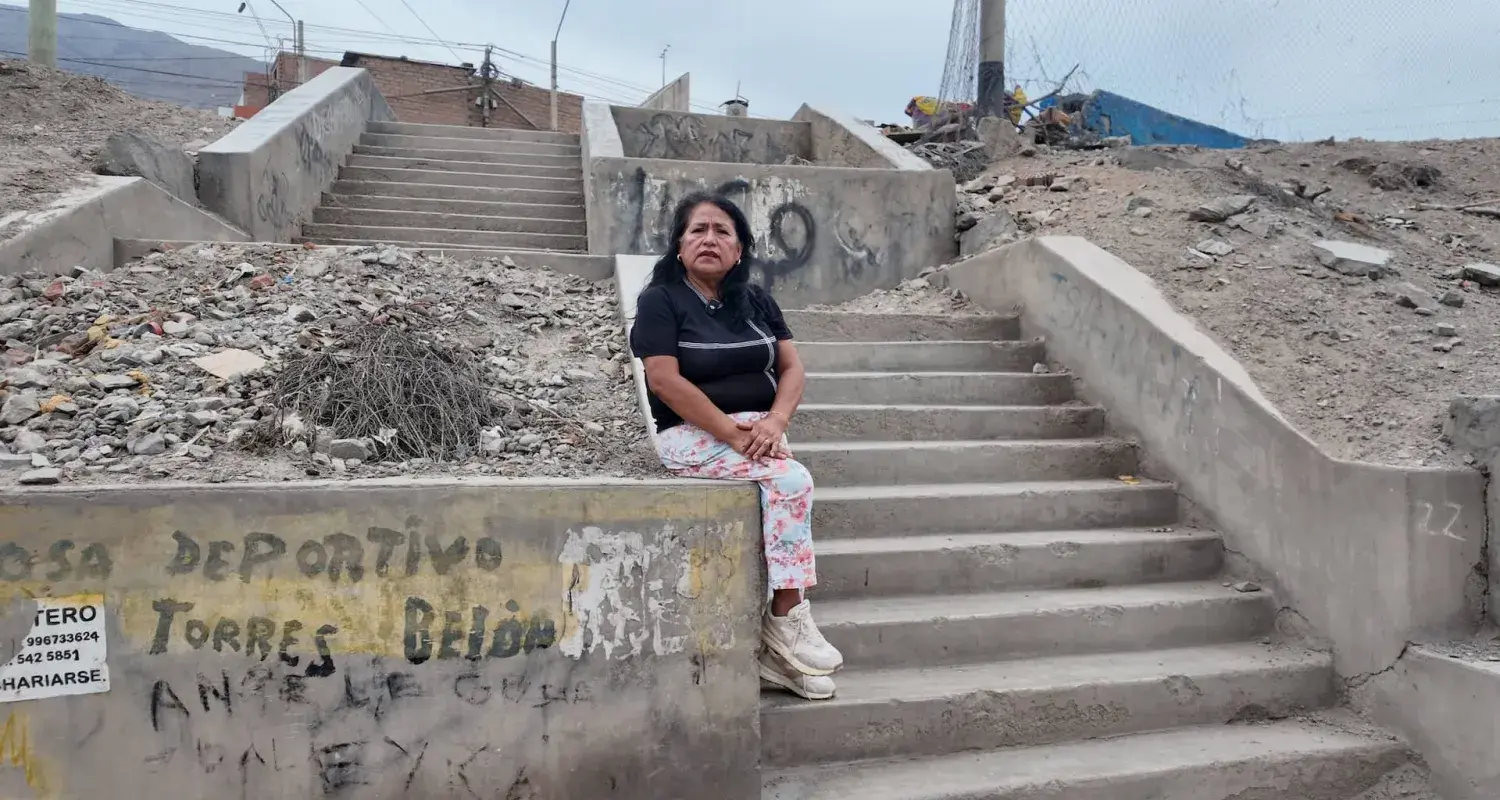
When a new approach to dengue reaches a community, its success often depends on whether people trust it. In Comas, on the northern edge of Lima, that trust is being built by Carmen Luz Estrella Paz, president of Zone 4, who made it her responsibility to understand the World Mosquito Program's Wolbachia method and explain it to her neighbours. Drawing on a painful family experience with the disease, she has turned dengue prevention into a personal mission - answering questions, dispelling rumours, and helping residents embrace a method she believes will save lives. Her story shows how community leadership turns a scientific innovation into lasting local acceptance.
"For us, dengue is a serious issue. That's why I believe Wolbachia is important, it will save lives."
In the desert hills of Zone 4 in Comas, Peru, access to water is not always easy. Many families must store it in barrels and containers so they can use it throughout the day. For Carmen Luz Estrella Paz, president of the zone, this daily reality is also a public health concern. When water remains stored for several days, she explains, it creates the perfect conditions for mosquitoes to reproduce. As Carmen puts it: "The mosquito doesn't waste any time, it finds the perfect place to lay its eggs."
As a community leader, Carmen understands the differences within her neighbourhood. In the lower part of the zonal area, concerns often focus on maintaining streets, trees, and public spaces. But in the upper area, the situation is different. There, dengue has become a constant concern. Over the years, this part of the district has reported dengue cases within the Peruvian capital's Lima Norte area, leading Carmen to make dengue prevention one of her top priorities.
Dengue - a deeply personal concern
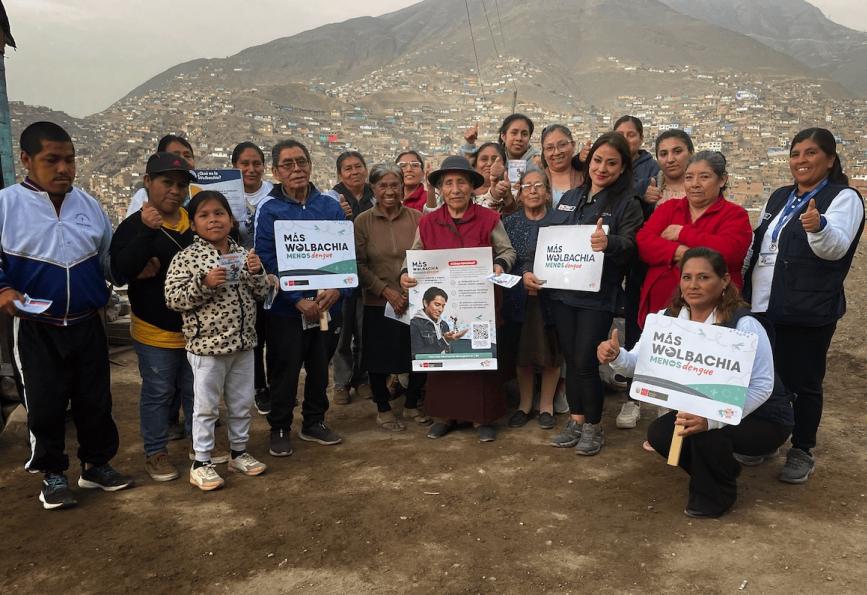
For her, the issue is not distant or abstract. "We cannot ignore it," she says firmly, especially because many neighbours have experienced the disease firsthand and understand what it means to live with it.
Her concern is also deeply personal. Several years ago, her family went through one of their most difficult moments when her nephew fell ill with severe dengue. At that time, cases were just beginning to appear in Lima, and information about the disease was still limited. No one fully understood what was happening or how to respond. As the days passed, his condition became critical and he was hospitalised. Carmen remembers that moment with anguish, convinced that if medical attention had come any later, the outcome might have been very different.
That experience profoundly changed how she viewed the disease. From that moment on, dengue stopped being just a public health issue and became a personal and community concern. "This worries me deeply, and I want to prevent it from happening to my neighbours, my family, and my community," explains Carmen.
With that commitment, she has worked alongside other community leaders and health authorities to strengthen prevention efforts in her neighbourhood. Carmen recognises that in recent years Peru's Ministry of Health has made significant efforts to inform communities and coordinate with local leaders, helping residents better understand the risks of dengue and the importance of prevention.
Be Part of the Solution: Join Our Community
Discover how we’re transforming lives and combating mosquito-borne illnesses globally. Sign up for exclusive insights and updates delivered straight to your inbox.
Learning about the impact of Wolbachia
It was within this context that Carmen first heard about a tried and tested approach that promised a solution to the devastation of dengue. At first, she recalls, the reaction among neighbours to the World Mosquito Program's (WMP) Wolbachia method was one of surprise. Many people wondered what it would mean and whether it could truly help fight dengue.
Carmen remembers those early conversations clearly - neighbours asking with uncertainty what this strategy really involved.
For her, however, being the zonal president meant taking on a clear responsibility: learning first so she could inform others. As the initiative was approved and endorsed by health authorities, Carmen believed it was important to understand it and help her community do the same. Over time, she began attending meetings organised by the Ministry of Health, where specialists and biologists explained how the Wolbachia bacterium can reduce the mosquito's ability to transmit viruses such as dengue.
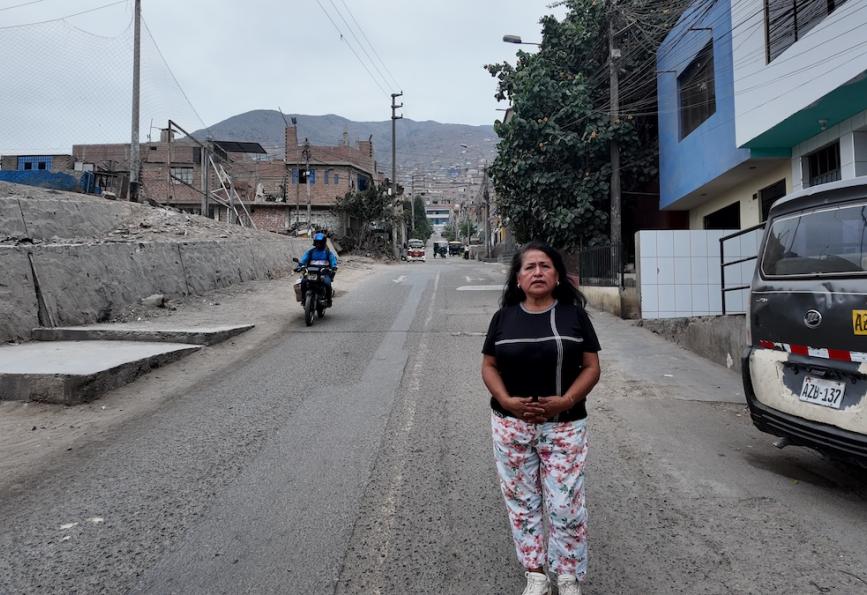
Convinced that information was essential, Carmen began sharing this knowledge throughout her community. Together with other delegates from her zonal area, she organised meetings in parks and neighbourhood spaces to explain how the strategy works and answer questions from residents. At the beginning, many people were influenced by rumours or incorrect information, but gradually those doubts were addressed through open dialogue. Acceptance increased, and residents began to embrace the promise of Wolbachia. Today, Carmen summarises her belief in a phrase she repeats with conviction: "Wolbachia is very important because it will save lives."
The effort did not stop with formal meetings. Carmen and other delegates also began speaking directly with nearby neighbours, sharing what they had learned in every conversation. She describes this effort as quiet but constant work, where each discussion helped more people understand the initiative.
A critical turning point against mosquito-borne disease
Today, Carmen approaches this challenge with optimism. She believes the Wolbachia strategy can represent a critical turning point in the fight against dengue in her zonal area and across Comas. Working together, the commitment from the community and expertise from health authorities and specialists will help deliver a solution that drives down dengue. For her, the fact that Comas is one of the first districts in Peru to apply this strategy is a valuable opportunity to protect the health of its residents.
When Carmen speaks about the future of her community, she does so with hope. She believes that the implementation of Wolbachia will bring real health benefits to neighbours and help reduce the impact of dengue in the district. "This will bring great benefits and protect the health of our people," she concludes.